Hydrostatic pressure
Water pushes with weight — at 2 m depth already 200 g/cm². Classic pool paints come off at the deep line first, then the problem spreads upward. The coating peels off in strips.
RUBBERPAINT
local_shipping
Versandkostenfrei ab €199,00
trending_up
Nur noch €199,00 bis kostenlosem Versand!
check_circle
Versandkostenfrei freigeschaltet! 🎉
bolt
Versand in 24 h
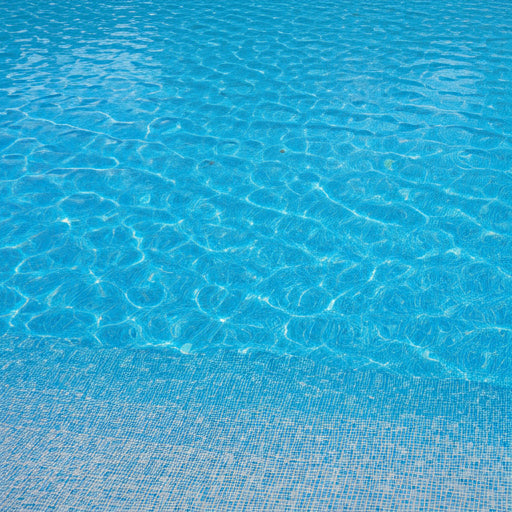
Elastic protective and decorative coating for concrete swimming pools — UV-stable, with smooth easy-to-clean surface. Suitable as an additional protective layer over existing primary waterproofing. Direct on prepared concrete, no specialist pool contractor needed.
A pool is one of the toughest applications around — permanent water load, chemicals, UV. The wrong material is unusable in 2–3 seasons. Refurbishment costs a fortune once a specialist firm has to come in.
Water pushes with weight — at 2 m depth already 200 g/cm². Classic pool paints come off at the deep line first, then the problem spreads upward. The coating peels off in strips.
Free chlorine (0.5–3 mg/l standard for swimming pools) is a strong oxidiser. Standard enamels are attacked, discolour, become brittle. After 1–2 seasons cracks and discolouration are visible.
Micro-fine cracks or a rough surface give algae a foothold. Once established, they are hard to remove — the pool turns green, water must be fully changed. A smooth, sealed surface is essential.
Suitable with standard pool care (free chlorine < 1.5 mg/l, pH 6.8–8.2). Also in salt-electrolysis pools with well-maintained water chemistry. With aggressive chemicals or permanent over-chlorination the coating can be attacked.
Elastic acrylic coating as an additional protective and decorative layer over an existing, properly executed primary pool waterproofing. Follows thermal movements of the substrate without cracking.
Algen finden keinen Halt. Reinigung mit Pool-Bürste und Standard-Reiniger problemlos — keine raue Struktur, in der sich Schmutz festsetzt.
Auch im Sommer in direkter Sonne flexibel und elastisch. Anders als klassische Pool-Anstriche, die unter UV-Belastung brüchig werden und nach 3 Jahren ersetzt werden müssen.
A dry substrate is essential.
Fully drain the pool, let dry — at least 7 days in sunny weather, longer if cloudy. Use a pressure washer to remove algae, limescale and old coating residue. Mechanically loosen any peeling areas, close cracks > 1 mm with concrete repair mortar and let cure for 7 days.
For old, defective coating we recommend removing completely down to solid concrete — half measures ruin the result.
Pro tip: Have the residual moisture of the pool concrete measured with the carbide method — moisture below 4 % is essential, otherwise layers come off later under water pressure.
Stabilise absorbent pool concrete.
Pool concrete is highly absorbent after cleaning. Apply deep primer, let dry for 24 h. This reduces first-coat consumption and significantly improves adhesion. For pools with old, defective coating, strip down to concrete first, then prime.
Apply deep primer thinly — a thick coat forms glossy spots that later fail under water pressure.
Pro tip: On very porous or cracked pool concrete: first apply a repair-mortar slurry as an equaliser, then deep primer — you get a perfectly prepared surface.
Diluted with up to 5 % water (up to 10 % with airless sprayer).
Diluted with up to 5 % water (up to 10 % with airless sprayer). Brush and lambswool roller. Consumption 200–250 g/m² (pool concrete is highly absorbent). Particularly careful on floor-to-wall transitions, at inlet jets and skimmer connections — these detail points demand gapless coverage.
Pool coating must be perfect — gaps or pinholes become leaks under water pressure.
Pro tip: At floor-to-wall transitions embed polyester fleece (60 g/m²) into the wet coat — prevents cracks from settling movement of the pool shell over the years.
Undiluted after 24 h of drying.
Undiluted, cross to the first coat. Consumption 150–200 g/m². Let dry until fully sealed — for pool application at least 8 h, ideally overnight. Wait longer in cooler weather or high humidity.
The coat must no longer be tacky to finger pressure and leave no impressions.
Pro tip: Cover the pool during work — prevents pollen, dust and insects landing in the wet coat, which would remain permanently visible under water.
Reinforcement for high-load zones.
Third coat at the deep line (lower 60 cm), transitions to jets, skimmer and steps. Reinforces the most heavily loaded zone, prevents delamination at key points. Consumption 100–150 g/m². Allow full cure — minimum 14 days before water filling, 28 days for full load capacity.
Before filling, sweep the pool thoroughly — dust and insects would remain permanently visible under water.
Pro tip: Fill the pool slowly the first time (over several hours) — hydrostatic pressure builds gradually and the coating can adjust, instead of being loaded all at once.
Pool coating requires three coats instead of the usual two. Apply the third coat especially in the deep line and at inlet/outlet jets. Fill with water no earlier than 14 days after full curing, ideally after 28 days. IMPORTANT: RubberPaint is intended as an additional protective and decorative coating — a suitable primary pool waterproofing must already be professionally installed.
Pools need 3 coats due to hydrostatic pressure. Calculate the interior area: floor + (perimeter × depth) + steps.
Standard: 3 Schichten. Pool-Standard.
Verbrauch: 170 g/m² pro Schicht. +10 % Reserve für Schnittkanten und unebene Flächen. Bei Großprojekten (> 80 m²) kontaktieren Sie uns für eine individuelle Beratung.
Empfehlung
für 20 m² · 2 Schichten
Wird berechnet…
Versandkostenfrei ab 199 € — schauen Sie sich Ihren Warenkorb nach dem Hinzufügen an.
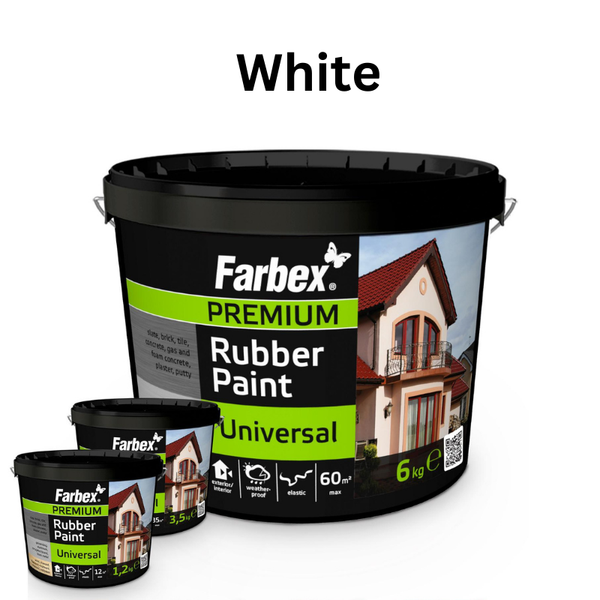
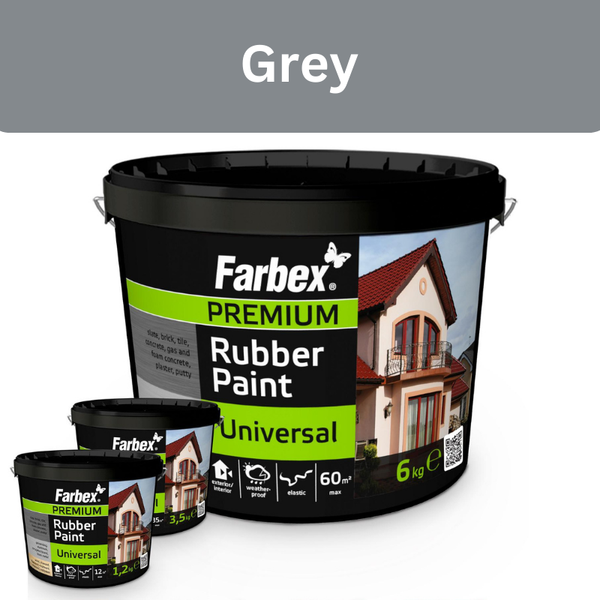
Hellblau und Dunkelblau lassen Wasser klarer und tiefer wirken — Pool-Klassiker. Hellgrün für tropische Optik, Weiß für maximale Helligkeit, Grau für moderne Architektur-Pools.
Unser Team berät Sie zu Pool-Vorbereitung, Materialbedarf und Aushärtungszeiten — kostenlos und unverbindlich.