Wasserflecken an der Decke
Die undichte Stelle macht sich erst Monate später bemerkbar — wenn die Dämmung bereits durchnässt ist und Putz, Tapeten oder Holz beschädigt sind.
RUBBERPAINT
local_shipping
Versandkostenfrei ab €199,00
trending_up
Nur noch €199,00 bis kostenlosem Versand!
check_circle
Versandkostenfrei freigeschaltet! 🎉
bolt
Versand in 24 h
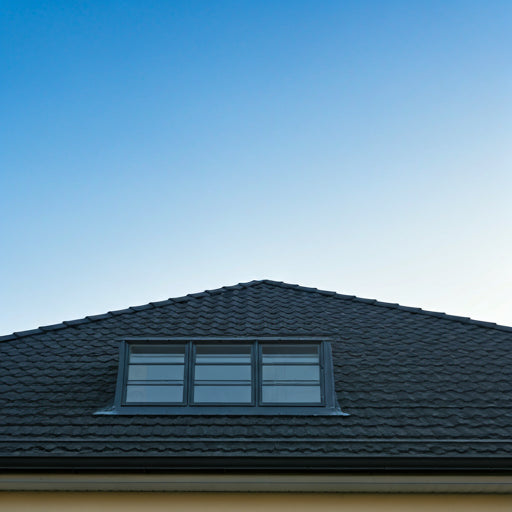
Liquid-plastic system against standing water, frost and UV. Directly on bitumen, concrete or EPDM. Without welding, without seams, without open flame — a continuous elastic membrane for long-term protection.
Ein Flachdach versagt selten plötzlich. Es versagt schleichend — und der Schaden zeigt sich erst, wenn die Bausubstanz schon getroffen ist.
Die undichte Stelle macht sich erst Monate später bemerkbar — wenn die Dämmung bereits durchnässt ist und Putz, Tapeten oder Holz beschädigt sind.
Durchfeuchtete Dämmung leitet Wärme bis zu 4× stärker als trockene. Heizkosten steigen um 15–25 %, Schimmel im Dachaufbau wird zur Frage der Zeit.
UV und Temperaturwechsel lassen alte Schweißbahnen jährlich um 0,2–0,5 mm reißen. Nähte sind das schwächste Glied — die neue Schicht muss nahtlos sein.
Übersteht hunderte Frost-Tau-Zyklen ohne Rissbildung. Hochelastisch (Klasse A0/C0) — folgt jeder Bewegung der Konstruktion.
Eine durchgehende Membran bis 200 m² ohne eine einzige Naht. Die häufigste Schadensquelle klassischer Dächer entfällt komplett.
Stabilisiertes Acryl-Latex-System. Keine Versprödung wie bei klassischem Bitumen — auch nach 15 Jahren prallem Sonnenschein elastisch.
Wartungswege, Klimaanlagen und Antennen sofort wieder erreichbar. Kein Bauausfall, kein Schweißbrenner, keine Brandgefahr.
The foundation of long life.
Clean the roof surface with pressure washer or wire brush — fully remove loose bitumen residue, moss, algae and dirt. Pre-fill cracks > 3 mm with bituminous repair compound, mechanically loosen any peeling areas. Substrate must be dust-free and dry for at least 4 h before application.
On heavily weathered bituminous sheets: apply a bitumen primer to stabilise.
Pro tip: Check the roof slope beforehand — if puddles form, we recommend a slope renovation with levelling compound first.
The critical 5 % of the area.
Chimneys, skylights, roof drains and upstands are the weakest points — 80 % of all leaks start here. Embed polyester fleece (60 g/m²) into the wet first coat, roll flush. Minimum 10 cm overlap at wall/upstand edges, cut circular around drains and work U-shaped into the upstand.
At wall connections: pull the fleece at least 15 cm up the wall for a reliable bond.
Pro tip: At chimney connections add a termination bar with sealant — fleece alone isn't enough against thermal movement.
Full-surface application.
Dilute with 0–5 % water. Apply with brush, lambswool roller or airless sprayer (15–18 MPa, nozzle 0.017–0.023″). Consumption 100–200 g/m². Work evenly in one direction, no gaps or thin spots. On weathered bitumen or porous concrete: deep primer 12 h beforehand recommended.
Particularly careful on fleece-reinforced areas — the coat must fully penetrate the fleece.
Pro tip: With an airless sprayer work against the wind — otherwise half the material lands on the neighbour's wall.
Patience pays off.
Dust-dry after 2 h, recoatable after 4 h, rain-resistant after 24 h at 23 °C / 50 % RH (manufacturer specification). Wait longer at lower temperatures — applying the second coat too early causes bubbles as residual moisture gets trapped.
Protect the roof from rain and frost during drying — at least 24 h without precipitation required.
Pro tip: Check the weather forecast 48 h ahead — flat-roof coating is not rain-tolerant and needs a stable weather window.
The final layer.
Apply undiluted, cross to the first coat. Consumption again 100–200 g/m². Rain-resistant after 24 h, carefully walkable after 24 h (soft shoes, no point loads), fully load-bearing and cured after 28 days.
On heavily-loaded maintenance paths or frequently walked areas we recommend a third coat for longer service life.
Pro tip: Mark maintenance paths with a contrast-coloured quartz-sand strip — extends service life through targeted wear protection and prevents point loads elsewhere.
On heavily weathered bituminous sheeting apply a deep primer first. At frequently walked maintenance paths or chimney connections we recommend a third coat. Fleece reinforcement at connections is a processing recommendation from rubber-paint.de and not part of the manufacturer specification.
Geben Sie Ihre Dachfläche und gewünschte Anzahl Schichten ein — wir empfehlen die optimale Kombination an Eimern. Für Flachdächer ist Schwarz Standard.
Standard: 2 coats. 3 for heavily-stressed surfaces.
Verbrauch: 150 g/m² pro Schicht. +10 % Reserve für Schnittkanten und unebene Flächen. Bei Großprojekten (> 80 m²) kontaktieren Sie uns für eine individuelle Beratung.
Empfehlung
für 20 m² · 2 Schichten
Wird berechnet…
Versandkostenfrei ab 199 € — schauen Sie sich Ihren Warenkorb nach dem Hinzufügen an.
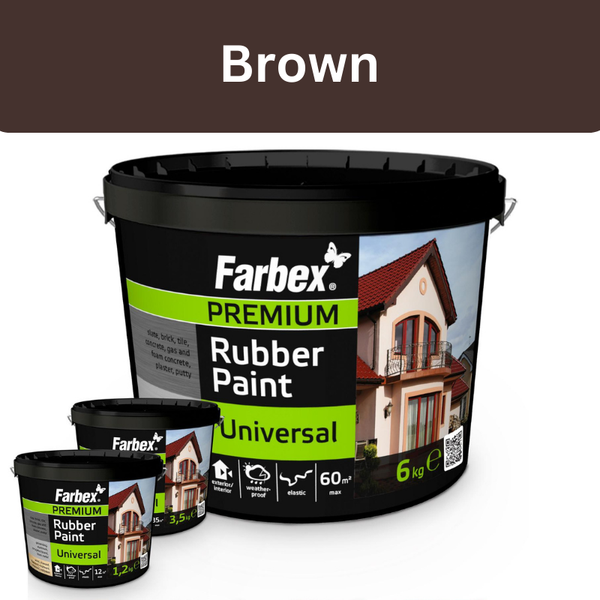
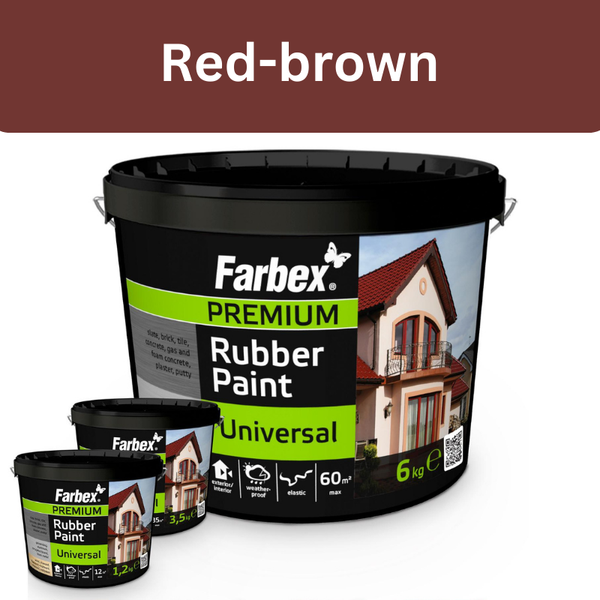
Schwarz und Anthrazit sind die meistgewählten Farben für Flachdächer — UV-stabil und unauffällig. Braun- und Rottöne passen zu klassischen Ziegel- und Schiefer-Optiken.
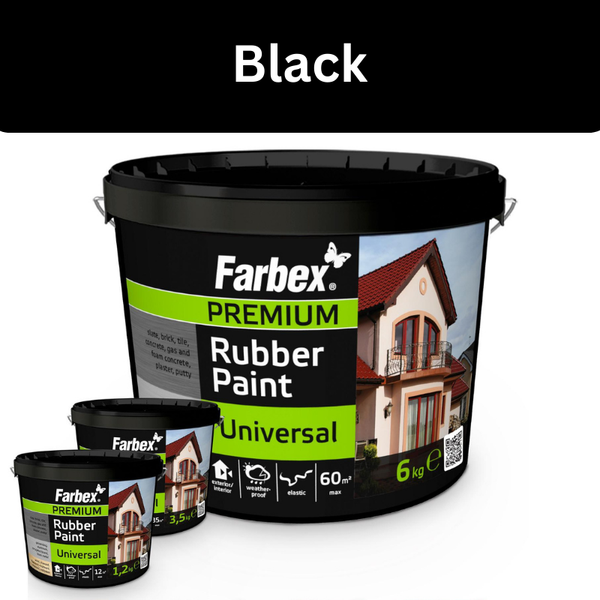
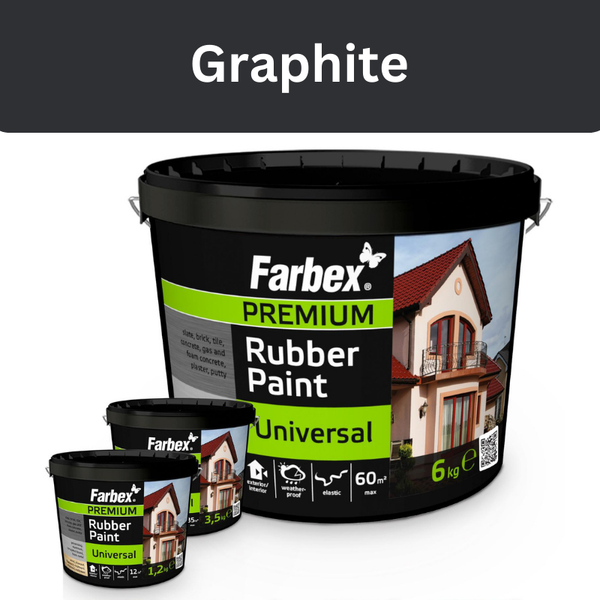
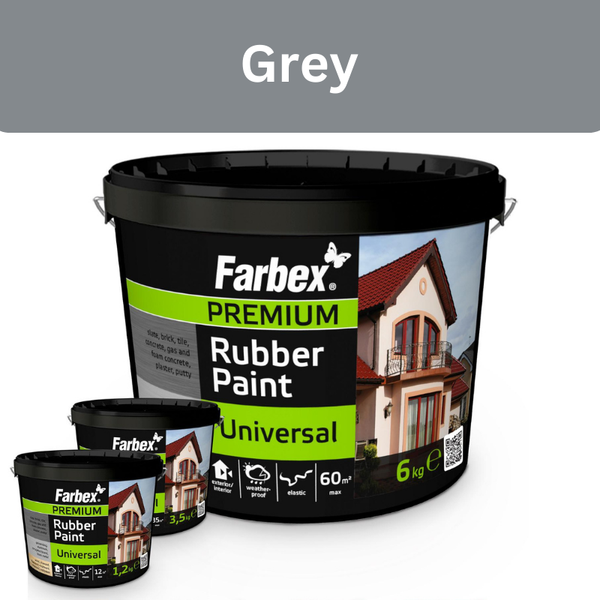
Unser Team berät Sie zu Untergrund-Analyse, Schichtdicken und Materialbedarf — kostenlos und unverbindlich.