Water to neighbour or living space
Risse im Balkonbelag lassen Niederschlag durch. Schäden zeigen sich oft erst Monate später als Wasserflecken im Wohnraum darunter — dann ist die Dämmung bereits durchnässt.
RUBBERPAINT
local_shipping
Versandkostenfrei ab €199,00
trending_up
Nur noch €199,00 bis kostenlosem Versand!
check_circle
Versandkostenfrei freigeschaltet! 🎉
bolt
Versand in 24 h
Elastic coating for balconies and terraces of concrete, screed or tiles. Walk-on after 24 h, frost-resistant, with optional anti-slip effect. Stops water ingress into the living spaces below.
Balcony damage shows up at the neighbour below first — water stains on their ceiling. By then your own building fabric is usually already affected. Refurbishment without a specialist firm gets expensive.
Risse im Balkonbelag lassen Niederschlag durch. Schäden zeigen sich oft erst Monate später als Wasserflecken im Wohnraum darunter — dann ist die Dämmung bereits durchnässt.
Eingedrungenes Wasser dehnt sich beim Gefrieren um 9 % aus. Fliesen springen, Estrich bröselt — typischerweise an den Randzonen zur Hauswand und an Aufkantungen.
Road salt destroys untreated concrete in winter. The salt solution seeps into pores, crystallises on freezing and spalls the material from the inside. After 5–8 years the substance is often completely worn out.
Schnelle Wiedernutzung — Sie können den Balkon einen Tag nach Auftrag wieder vorsichtig betreten. Volle Belastbarkeit nach 28 Tagen.
Mit Quarzsand-Beimischung in der letzten Schicht wird die Oberfläche rutschfest — ideal für Balkone mit Kindern oder im winterlichen Frostbereich.
Wasser dringt nicht mehr ein — die Sprengwirkung von gefrierendem Wasser entfällt. Geprüft für mitteleuropäische Witterung mit hunderten Frost-Tau-Zyklen.
Auch in voller Sommersonne flexibel — keine Versprödung, kein Reißen. Anders als klassische Bitumenanstriche, die in der Sonne hart und brüchig werden.
Clean existing tiles or concrete.
Pressure washer (min. 100 bar) — remove old algae, moss, road-salt residue and loose particles. Fill cracks in screed or concrete with elastic repair filler — cracks > 0.5 mm become leak spots later. Renew defective tile joints with sanitary silicone; re-glue any loose tiles first.
For heavily damaged substrate: re-lay the screed and let it cure for at least 28 days — residual moisture must be below 4 % before coating.
Pro tip: Test absorbency with the water-drop test — if water soaks in within 30 seconds, the substrate is ready.
The critical transition to the house wall.
Pre-bend polyester fleece (60 g/m²) into a U-shape: 5 cm on the balcony floor, 10–15 cm up the house wall. Embed into the wet first coat, press flat with a roller — no air bubbles. Also reinforce around drains, skylights and balustrade fixings — these detail points cause 80 % of all leaks.
At the wall-to-floor transition work the fleece carefully into the inside corner — the coating should run up seamlessly.
Pro tip: Pre-condition fleece for 24 h before use — unroll at room temperature so it doesn't shrink back later.
Diluted with 5 % water.
Apply with lambswool roller (short nap, 10 mm) or wide brush. Consumption 100–200 g/m², thin layer in a single pass. Particularly careful on upstands and in corners — these must be sealed without gaps. Press fleece-reinforced spots repeatedly until the fleece is fully saturated and shows through.
Above 25 °C or in direct sun: work before 11 a.m. or after 4 p.m. — otherwise the coat dries too quickly on the surface.
Pro tip: Start on the side opposite the balcony door and work backwards — that way you never walk on a freshly coated area.
Let the first coat cure.
At 23 °C and 50 % humidity at least 4 hours, longer in cooler weather (up to 8 h). Test: the coat must no longer be tacky to finger pressure. Protect the balcony from rain and direct sun throughout drying — stretch a tarpaulin over the railing if the weather is uncertain.
The first 24 hours are critical — precipitation can soften the coat and leave water marks.
Pro tip: In high humidity (above 70 %), set up a dehumidifier or apply the next coat the following day — patience delivers the better result.
Undiluted, with anti-slip option.
Apply undiluted, cross to the first coat. Consumption 100–200 g/m². For a slip-resistant finish: sprinkle fine quartz sand (0.3–0.5 mm) evenly into the still-wet coat, let dry for 24 h, sweep off loose grains, then a third thin coat as a sealer. Slip rating reaches R10 (recommended for residential balconies).
Fully load-bearing after 28 days — don't place heavy furniture or planters before then.
Pro tip: Apply quartz sand evenly through a flour sieve, not straight from the bag — otherwise you get clumps and uneven slip resistance.
Upstands and transitions to the house wall are the weakest spot of every balcony — 80 % of all leaks start here. Embed polyester fleece (60 g/m²) into the wet first coat, pull it at least 15 cm up the wall. This prevents cracks from differential movement between balcony and house wall. (Processing recommendation from rubber-paint.de — not part of manufacturer specification.)
Messen Sie die Bodenfläche + 50 cm Aufkantung an der Hauswand. Für Antirutsch-Variante: dritte Schicht erforderlich.
Standard: 2 coats. 3 for heavily-stressed surfaces.
Verbrauch: 150 g/m² pro Schicht. +10 % Reserve für Schnittkanten und unebene Flächen. Bei Großprojekten (> 80 m²) kontaktieren Sie uns für eine individuelle Beratung.
Empfehlung
für 20 m² · 2 Schichten
Wird berechnet…
Versandkostenfrei ab 199 € — schauen Sie sich Ihren Warenkorb nach dem Hinzufügen an.
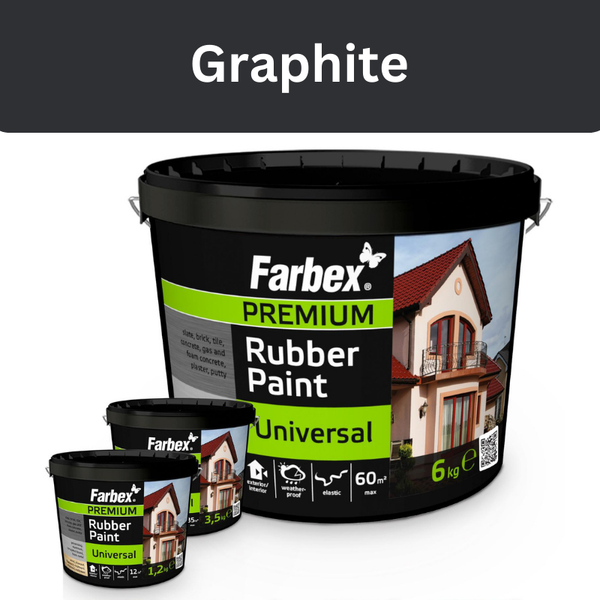
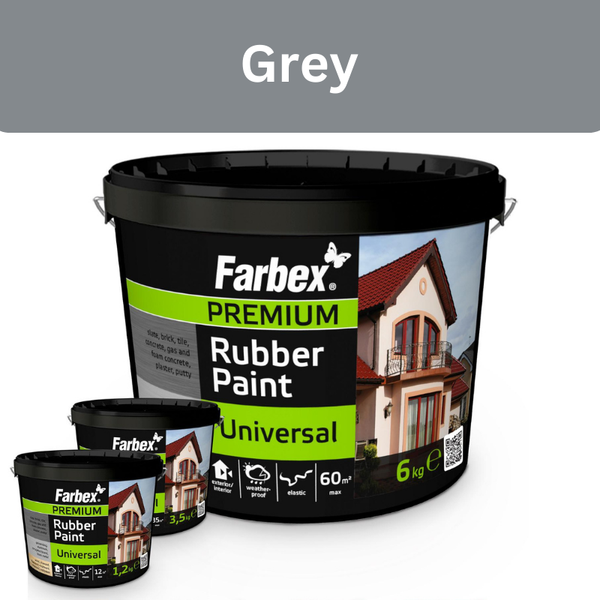
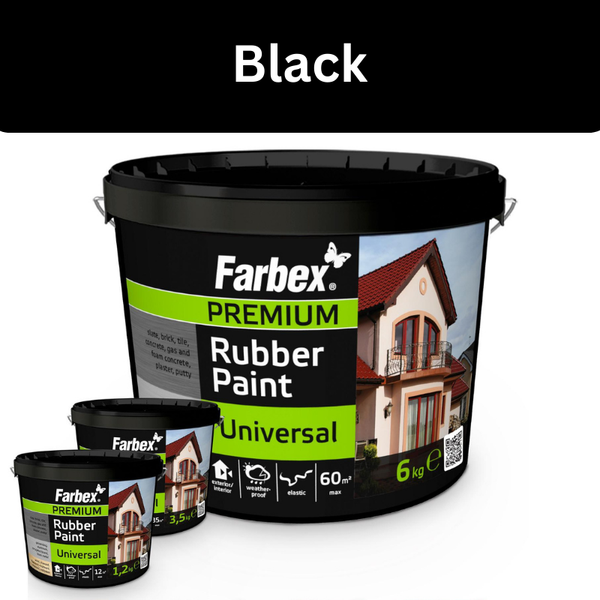
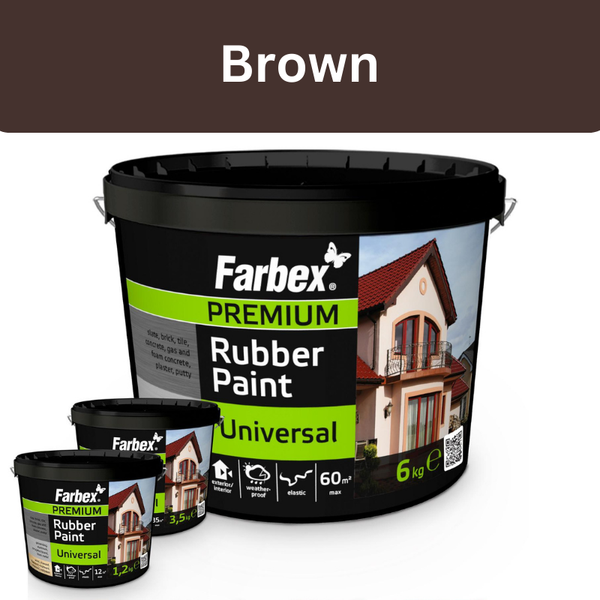
Anthracite and grey dominate modern balcony refurbishments — they hide dirt and match any house colour. Beige and brown for a Mediterranean look, black for an industrial-loft feel.
Unser Team berät Sie zu Untergrund, Aufkantungs-Detail und Antirutsch-Variante — kostenlos und unverbindlich.